
Geopolitics of AI: Why Nations Are Building Their Own Models
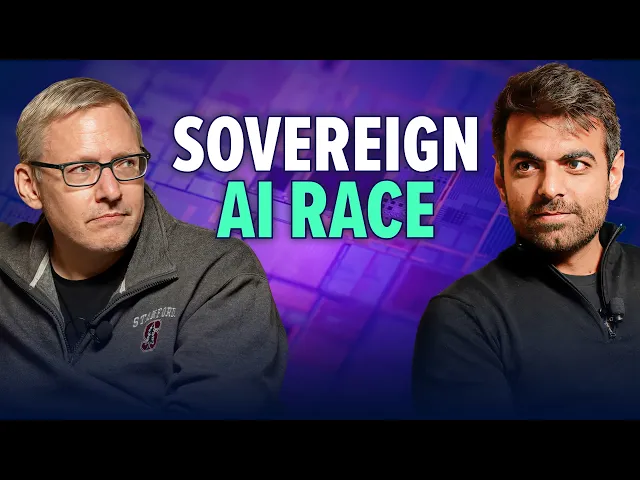
AI sovereignty becomes new arms race
In a world where technological dominance increasingly dictates geopolitical power, a new high-stakes competition has emerged. Nations around the globe are racing to develop their own artificial intelligence models, not just for economic advantage but as a matter of national security and cultural autonomy. This shift toward "AI sovereignty" represents perhaps the most significant technological inflection point since the nuclear arms race, with equally profound implications for global power dynamics.
Key developments driving AI nationalism:
- Strategic independence concerns have pushed countries like France, China, and Saudi Arabia to invest billions in developing native AI capabilities, viewing foreign AI dependency as an unacceptable vulnerability
- Control over information flow and cultural values has become a primary motivation, as governments recognize that AI models trained on Western data inherently embed Western perspectives and priorities
- Economic and military advantages of proprietary AI technology create compelling incentives for nations to develop indigenous systems rather than rely on potentially restricted foreign technology
- Data sovereignty considerations have accelerated as governments recognize that sending citizens' data to foreign AI providers creates both security vulnerabilities and dependence on foreign technology providers
What's particularly striking about this trend is how quickly it's accelerated. Just months after ChatGPT's release, we witnessed Saudi Arabia committing $40 billion to AI development, the UAE launching Falcon, France and Germany developing their own large language models, and China making aggressive moves to establish AI independence. This isn't merely technological competition—it's a fundamental restructuring of how nations view digital sovereignty in the AI era.
The most insightful aspect of this development is how AI has transformed from a commercial technology into a national security imperative almost overnight. Unlike previous technological revolutions that gradually became matters of state concern, AI's immediate impact on information control, economic competitiveness, and military capability has compressed this evolution into months rather than decades. The strategic implications are profound: nations that fail to develop sovereign AI capabilities risk becoming digitally colonized, surrendering not just economic opportunity but cultural and informational autonomy.
This parallels historical patterns we've seen with other transformative technologies. When nuclear technology emerged in the 1940s, countries quickly recognized that relying on foreign nuclear capabilities created unacceptable dependencies. The same pattern emerged with space technology, semiconductor manufacturing, and now AI. What makes the AI sovereignty race unique is its accessibility—
Recent Videos
Hermes Agent Master Class
https://www.youtube.com/watch?v=R3YOGfTBcQg Welcome to the Hermes Agent Master Class — an 11-episode series taking you from zero to fully leveraging every feature of Nous Research's open-source agent. In this first episode, we install Hermes from scratch on a brand new machine with no prior skills or memory, walk through full configuration with OpenRouter, tour the most important CLI and slash commands, and run our first real task: a competitor research report on a custom children's book AI business idea. Every future episode will build on this fresh install so you can see the compounding value of the agent in real time....
Apr 29, 2026Andrej Karpathy – Outsource your thinking, but you can’t outsource your understanding
https://www.youtube.com/watch?v=96jN2OCOfLs Here's what Andrej Karpathy just figured out that everyone else is still dancing around: we're not in an era of "better models." We're in a different era of computing altogether. And the difference between understanding that and not understanding it is the difference between being a vibe coder and being an agentic engineer. Last October, Karpathy had a realization. AI didn't stop being ChatGPT-adjacent. It fundamentally shifted. Agentic coherent workflows started to actually work. And he's spent the last three months living in side projects, VB coding, exploring what's actually possible. What he found is a framework that explains...
Mar 30, 2026Andrej Karpathy on the Decade of Agents, the Limits of RL, and Why Education Is His Next Mission
A summary of key takeaways from Andrej Karpathy's conversation with Dwarkesh Patel In a wide-ranging conversation with Dwarkesh Patel, Andrej Karpathy — former head of AI at Tesla, founding member of OpenAI, and creator of some of the most popular AI educational content on the internet — shared his views on where AI is headed, what's still broken, and why he's now pouring his energy into education. Here are the key takeaways. "It's the Decade of Agents, Not the Year of Agents" Karpathy's now-famous quote is a direct pushback on industry hype. Early agents like Claude Code and Codex are...