
Scientists track humpback whale migration with an assist from AI technology
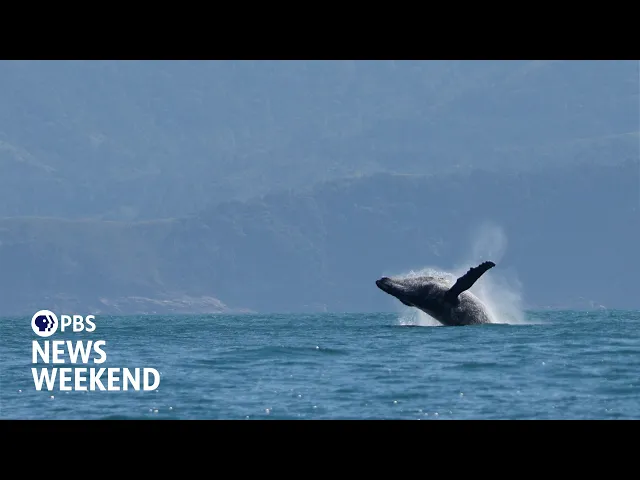
AI and oceanic allies track our giant neighbors
In the vast expanse of our oceans, understanding the mysterious lives of humpback whales has always challenged marine biologists and conservationists alike. A fascinating development is now emerging where artificial intelligence is becoming a powerful ally in tracking and studying these magnificent creatures, helping scientists unravel the complex patterns of whale migration with unprecedented precision. This technological partnership between humans and AI systems represents a significant leap forward in marine conservation efforts.
Key insights from the whale tracking revolution:
-
AI algorithms are now capable of identifying individual whales through their unique markings and physical characteristics, creating a digital "fingerprint" that allows researchers to track specific animals across vast oceanic distances.
-
The combination of acoustic monitoring, satellite tracking, and AI-powered image recognition has created a multi-dimensional view of whale movements that was previously impossible to achieve.
-
By analyzing patterns in the collected data, scientists can now predict migration routes with greater accuracy, helping to establish protected corridors and reduce deadly ship strikes.
-
The democratization of this technology allows citizen scientists and whale watchers to contribute meaningful data to research efforts, expanding the monitoring network far beyond what professional scientists could achieve alone.
The most compelling aspect of this technological advancement is how it transforms conservation from a reactive practice to a predictive science. Traditional whale tracking relied heavily on chance encounters and limited sampling, providing only snapshots of whale behavior. AI-enhanced tracking, however, offers continuous monitoring and pattern recognition at scale. When a whale appears in Alaskan waters in spring and is later identified off Hawaii in winter, AI doesn't just confirm the connection—it helps predict when and where that whale might appear next year, and which route it might take.
This matters tremendously in our increasingly busy oceans. Shipping lanes, fishing operations, and offshore energy development all pose potential threats to migrating whales. With predictive models powered by AI, we can redesign human activities around whale migration patterns rather than forcing whales to navigate our industrial footprint. The practical impact extends beyond just preventing collisions—it enables truly sustainable ocean management where economic activities and conservation goals can coexist.
What the current tracking initiatives don't yet fully address is the impact of climate change on whale migration patterns. As ocean temperatures rise and prey distributions shift, historical migration routes are likely to change. This presents both a challenge and an opportunity for AI-
Recent Videos
Hermes Agent Master Class
https://www.youtube.com/watch?v=R3YOGfTBcQg Welcome to the Hermes Agent Master Class — an 11-episode series taking you from zero to fully leveraging every feature of Nous Research's open-source agent. In this first episode, we install Hermes from scratch on a brand new machine with no prior skills or memory, walk through full configuration with OpenRouter, tour the most important CLI and slash commands, and run our first real task: a competitor research report on a custom children's book AI business idea. Every future episode will build on this fresh install so you can see the compounding value of the agent in real time....
Apr 29, 2026Andrej Karpathy – Outsource your thinking, but you can’t outsource your understanding
https://www.youtube.com/watch?v=96jN2OCOfLs Here's what Andrej Karpathy just figured out that everyone else is still dancing around: we're not in an era of "better models." We're in a different era of computing altogether. And the difference between understanding that and not understanding it is the difference between being a vibe coder and being an agentic engineer. Last October, Karpathy had a realization. AI didn't stop being ChatGPT-adjacent. It fundamentally shifted. Agentic coherent workflows started to actually work. And he's spent the last three months living in side projects, VB coding, exploring what's actually possible. What he found is a framework that explains...
Mar 30, 2026Andrej Karpathy on the Decade of Agents, the Limits of RL, and Why Education Is His Next Mission
A summary of key takeaways from Andrej Karpathy's conversation with Dwarkesh Patel In a wide-ranging conversation with Dwarkesh Patel, Andrej Karpathy — former head of AI at Tesla, founding member of OpenAI, and creator of some of the most popular AI educational content on the internet — shared his views on where AI is headed, what's still broken, and why he's now pouring his energy into education. Here are the key takeaways. "It's the Decade of Agents, Not the Year of Agents" Karpathy's now-famous quote is a direct pushback on industry hype. Early agents like Claude Code and Codex are...