
The treadmill just doubled in speed. Most CEOs are still calibrated to walk.
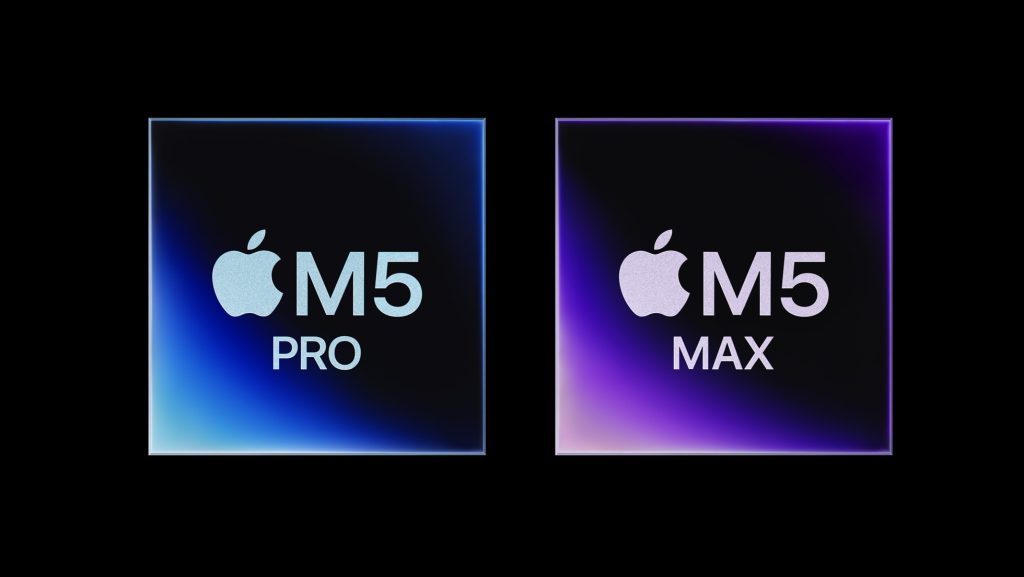
Apple (NASDAQ: AAPL) launched the M5 Pro and M5 Max today with a stat that should stop every AI investor mid-scroll: 4x faster LLM prompt processing than last year’s chips. That’s not a spec bump. That’s Apple telling the cloud inference industry it plans to make their margin structure irrelevant. Buy the MacBook, run the model, pay zero tokens forever. The 14-inch M5 Pro starts at $2,199 with neural accelerators baked into the GPU cores and unified memory that eliminates the CPU-GPU bottleneck killing every other local inference setup. Apple isn’t selling laptops. It’s selling the end of per-token pricing.
Meanwhile, a secret buyer dropped $300 million on AMD (NASDAQ: AMD) GPUs cooled with lab-grown diamonds, because the only way to keep scaling centralized inference is to solve a thermodynamics problem, not a software problem. Diamonds conduct heat 5x better than copper. The chips run throttle-free at higher temperatures. Fewer GPUs per rack, lower power draw per facility. Someone with very deep pockets just bet that the ceiling on AI isn’t code. It’s physics.
And Jack Dorsey cut 4,000 jobs at Block (NYSE: SQ), claiming AI can do 40% of the work. He tripled headcount to 12,000 between 2019 and 2022. The stock peaked at $275 and dropped 75%. A Harvard study found AI tools don’t reduce work, they intensify it. The AI story is convenient cover for a management failure, and Wall Street rewarded it with a 20% pop.
Here’s the thread. The AI race everyone’s watching (who has the best model, who raised the most money, who won the benchmark) is a distraction. The real race is physical: who controls the silicon, the thermal management, the power, and the organizational clock speed to actually deploy any of it. OpenAI just raised $110 billion at an $840 billion valuation. 62% of enterprises remain stuck in AI pilot phase. The moat isn’t the model. It’s the infrastructure underneath it, and the willingness to blow up your own org chart to use it. Most companies have neither.
Apple’s M5: The Zero-Token Bet
Apple didn’t launch a laptop today. It launched an inference strategy.
The M5 Pro and M5 Max ship with 4x faster LLM prompt processing than their M4 predecessors, neural accelerators baked into the GPU cores, and unified memory architecture that eliminates the CPU-GPU bottleneck that throttles every other local inference setup. The 14-inch M5 Pro starts at $2,199. The M5 Max pushes into workstation territory at $3,899 for the 16-inch. Pre-orders open today, shipping March 11.
The numbers matter less than the architecture. Apple is designing silicon specifically to run AI models locally, on-device, with no cloud dependency. Every other major AI company is building a business model around per-token pricing. OpenAI charges $15 per million tokens for its flagship. Anthropic charges $3 to $15 depending on the model. Google, same range. All of them need you to keep calling the API.
Apple’s pitch is different: pay once, run forever. The marginal cost of inference on an M5 is your electricity bill. No metering. No API keys. No vendor lock-in on the model layer. That’s not a product launch. That’s a pricing attack on the entire cloud inference economy.
The real story: The semiconductor industry was always a materials science play disguised as a computing story. The same pattern is repeating. While everyone debates which LLM wins the benchmark, Apple is winning the physics. Custom silicon, purpose-built for neural workloads, manufactured at TSMC on the latest process node, delivered in hardware they control end-to-end. The moat isn’t the model. It’s the atom.
What business leaders need to know: If your AI cost model assumes per-token cloud pricing indefinitely, you’re building on sand. Apple just told you the future of consumer and prosumer inference is local, amortized into hardware. Run the math on what your team’s inference bill looks like at zero marginal cost. If the answer changes your roadmap, it should change it now, not when your competitors figure it out.
The $300 Million Diamond Play Nobody’s Talking About
A secret buyer placed a $300 million order for AMD GPUs cooled with lab-grown diamonds. If you skipped past this story, go back.
Lab-grown diamonds conduct heat five times better than copper. That’s not incremental. That’s a category change in thermal management. The chips run throttle-free at higher temperatures, which means more sustained compute per watt, which means fewer GPUs needed per rack, which means lower power draw per data center. The constraint on scaling AI inference isn’t software. It’s heat. And someone just bet $300 million that diamonds solve it.
This is your ASML story. On February 24, thirty newsletters covered the Anthropic drama. Almost nobody covered ASML’s breakthrough in EUV light sources that could increase chip output by 50%. Same dynamic here. The diamond-cooling story won’t trend on X. It won’t generate hot takes. But it tells you where the infrastructure bottleneck actually sits, and who’s spending real money to break through it.
The historical parallel matters. Every computing era was defined by a materials breakthrough, not a software one. The transistor replaced the vacuum tube. Fiber optics replaced copper wire. EUV lithography enabled sub-7nm chips. Each time, the people tracking the software missed the signal. The people tracking the materials made the money.
Why it matters: AI superiority is measured in gigawatts and thermal dissipation, not benchmark scores. If you’re allocating capital to AI infrastructure, look at the thermal stack, the power contracts, and the materials science. The $300 million diamond order tells you something the $110 billion OpenAI round doesn’t: the people actually building data centers know the ceiling is physics, not code.
Fire the CEO (No, Actually)
Jack Dorsey cut 4,000 people at Block and said AI can handle 40% of the work. The stock jumped 20%. Wall Street cheered.
Nobody asked the obvious question. Dorsey tripled Block’s headcount from 3,900 to 12,000 between 2019 and 2022. The stock peaked above $275 and has dropped 75% since. The company spent $68.1 million on a single corporate event in September 2025. And now he’s framing a 40% workforce reduction as technological inevitability rather than a correction for years of undisciplined empire-building.
Here’s the uncomfortable version of the argument. If AI can replace thousands of engineers, why can’t it replace the CEO? The median S&P 500 CEO made $17.1 million in 2024. That’s 85 senior software engineers. CEOs make expensive, irreversible decisions at scale (exactly the kind of work where pattern-matching AI excels) and they’re protected by a governance structure designed to insulate them from accountability.
A Harvard study found that AI tools didn’t reduce work, they consistently intensified it. The Jevons Paradox, first observed with coal in 1865, is playing out in real time: make something more efficient and you don’t use less of it. You use more. Developers using AI code assistants are working longer hours, not shorter ones. The productivity gain gets absorbed by rising expectations.
Connect the dots: The CEO got the job by mastering the old treadmill. The treadmill just doubled in speed. Not gradually. Overnight. And the margin for error halved with it. A friend at a major tech hedge fund told us this week from a San Francisco conference: “I’ve never seen so many ostriches in my life. They just don’t get it.” These aren’t uninformed people. They’re structurally incapable of acting on what they know, because their compensation, their fund structures, and their risk models are all calibrated to 3 mph. The belt is running at 6.
The Five-Person Bet: Why CEOs Should Think Like VCs
Here’s what changes the math on everything above: the cost of experimentation just collapsed.
A company running 30 AI agents in production found that one agent (code-named Monaco) generated 64 outreach contacts and booked 6 meetings in its first week. The whole operation ran with 12 humans at peak. That’s not an anecdote. That’s a proof point. Five people with AI augmentation can now build and ship in three months what fifty people used to deliver in eighteen.
So here’s the question no board is asking: what does it cost to run ten five-person teams hacking at a solution for 90 days? At a multi-billion dollar company, that’s a rounding error. It’s less than the CEO’s comp package. It’s less than the annual offsite at the Montage. You could fund the entire portfolio of experiments with what Block spent on that one September event.
VCs invest in ten startups expecting nine to fail. The one that works becomes a unicorn. There’s no reason a public company can’t run the same playbook internally, except that the organizational chart was built to prevent it. Middle management exists to consolidate information, reduce redundancy, and ensure alignment. “Reduce redundancy” is just a polite way of saying “kill parallel experimentation.” The entire management layer is an anti-portfolio machine, and it was rational when bets cost $50 million each. When bets cost $500,000, it’s an anchor.
The historical rhyme is Xerox PARC. They invented the GUI, the mouse, Ethernet, and laser printing. The parent company couldn’t capitalize on any of it because the org chart treated innovation as an antibody. Steve Jobs walked in, saw the future, and built Apple on Xerox’s dime. The invention happened inside the big company. The value creation happened in the startup.
The action item: Run the numbers. Ten teams, five people, three months, AI-augmented. What does that cost you? Now compare it to one failed enterprise software implementation. Or one year of a CEO who’s optimizing for a world that no longer exists. The cost of experimentation dropped 90%. Any executive who isn’t running a portfolio of internal bets is overpaying for certainty in a world where certainty is the most expensive illusion you can buy.
The Bottom Line
The AI race isn’t a software race. It’s a physics race, an organizational race, and a clock speed race, and most companies are losing all three.
Stop pricing AI as a software margin business. Apple just collapsed inference costs to silicon. Lab-grown diamonds are solving the thermal ceiling. The moat is shifting from model weights to atoms. If your investment thesis depends on per-token pricing power holding, stress-test it against a world where local inference is free and cloud inference is a commodity.
Audit your org chart like a portfolio, not a hierarchy. The cost of a five-person, three-month experiment is now trivial. If you’re not running ten of them in parallel, you’re paying enterprise prices for startup-speed answers. The companies that figure out internal venture mechanics will outrun the ones still routing innovation through committee.
Fire the operating system, or it fires you. The CEOs, fund managers, and board members calibrated to quarterly cadence and incremental improvement are the ostriches in the room. The treadmill doubled. The margin for error halved. The people who see it are already moving. The ones who don’t are optimizing for a world that ended six months ago.
The winners won’t be the companies with the best models. They’ll be the ones who own the physics, move at startup speed, and treat experimentation as a line item, not a luxury.
It is difficult to get a man to understand something when his salary depends upon his not understanding it.” — Upton Sinclair
Key People & Companies
| Name | Role | Company | Link |
|---|---|---|---|
| Tim Cook | CEO | Apple | |
| Jack Dorsey | CEO | Block | X |
| Sam Altman | CEO | OpenAI | X |
| Dario Amodei | CEO | Anthropic | X |
| Jason Lemkin | Founder | SaaStr | X |
Sources
- Apple Newsroom: Apple launches new MacBook Pro with M5 Pro and M5 Max chips
- Tom’s Hardware: Secret Buyer Places $300M Order for AMD GPUs Cooled With Lab-Grown Diamonds
- Various: Can AI do 40% of your job? Block’s Jack Dorsey thinks so
- SaaStr: We Have 30 AI Agents in Production
- Endor Labs: Only 10% of AI-generated code is secure
- CNBC: OpenAI secures $110B to cement enterprise AI dominance
- Various: Fire the CEO
🎵 On Repeat: Once in a Lifetime by Talking Heads — because every CEO waking up to this moment is asking the same question: “Well, how did I get here?”
Compiled from 12 sources across Apple Newsroom, Tom’s Hardware, CNBC, SaaStr, Endor Labs, and Harvard Business Review. Cross-referenced with thematic analysis and edited by CO/AI’s team with 30+ years of executive technology leadership.
More like this

Central Casting
A Tokyo lab built an AI whose only job is to hire the other AIs and it outscores every one it manages. When the model is a rental, the power moves to whoever runs the casting desk. Stop standardizing on a model; own the layer that decides which one gets the part.

The Keeper of the Culture
The market spent the week in a billion-dollar bidding war for the people who build AI — on the very day the machine came for them. The moat was never the name on the jersey. It's the uncredited hand that makes the team mesh. Stop signing free agents; find who keeps the house.

Cars and Trucks and Things That Go
Midjourney built a body scanner that's half real breakthrough, half science-fiction sales pitch, and telling the two apart is the only skill that matters now. The cynic can't. The hype man won't. Be amazed and stay skeptical; they're the same muscle