
Today's Briefing for Tuesday, March 24, 2026
OpenAI Guarantees PE Firms 17.5%. The Bonfire Gets a Bigger Tent
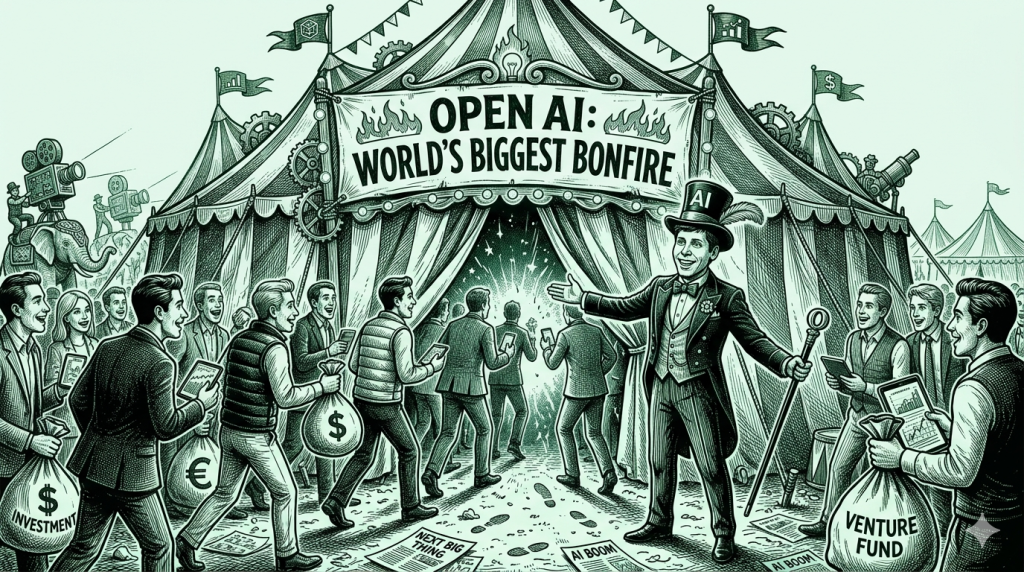
THE NUMBER: 17.5% — the guaranteed minimum return OpenAI is offering private equity firms to raise $4 billion in new capital. For context, the S&P 500 has averaged 10.5% annually over the last decade. When a pre-IPO company expected to go public at over $1.5 trillion has to promise returns that beat the market by 70% just to get investors in the door, the incentive structure is telling you something the press release isn’t.
The Opening
Two stories landed today that look separate but aren’t. OpenAI is offering PE firms a guaranteed 17.5% return with downside protection to raise $4 billion. And OpenAI is rolling out ads across ChatGPT to 900 million weekly active users at $60 CPM with a $200,000 minimum buy. Early partners include Shopify (NYSE: SHOP), Target (NYSE: TGT), and Adobe (NASDAQ: ADBE).
💲 Follow the money and you see the full picture. OpenAI burned through roughly $14 billion last year on approximately $10 billion in revenue. After a $110 billion raise in February that pushed the valuation to $840 billion, the cash still isn’t enough. So now they’re guaranteeing PE firms returns that would make a hedge fund blush, and bolting an ad engine onto the product that was supposed to be the gateway to artificial general intelligence.
Charlie Munger said it best: show me the incentives and I’ll show you the behavior. The incentive here isn’t to build AGI. It’s to keep the tent standing.
Meanwhile, on the other side of the industry, the agent era is arriving without any of the infrastructure it needs. 🦞 Harrison Chase (LangChain CEO) tweeted today about a fundamental distinction most companies haven’t even considered: there are two completely different types of agent authorization, “Claws” (fixed credentials, the agent acts as itself) and “Assistants” (user credentials, the agent acts on your behalf). Most companies deploying agents don’t understand this yet. One of us tried to buy a pair of slides from a Shopify store using an agent yesterday. Got all the way to checkout. The agent didn’t have a wallet. There was no agentic path into the store at all. The agent did exactly what a human would have done, click by click, at exactly the same speed.
The biggest AI company in the world is scrambling for cash while selling ads. The agent revolution has no plumbing. These are connected. The money is flowing to valuations while the infrastructure remains unbuilt.
💲 The $840 Billion Carnival: OpenAI’s PE Play Is a Distribution Deal in Disguise
Sam Altman’s OpenAI isn’t raising $4 billion because it needs more capital. It raised $110 billion six weeks ago. It’s raising $4 billion because of who’s writing the checks.
Private equity firms don’t just invest. They own companies. Hundreds of them. When Thoma Bravo or Vista or Silver Lake puts money into OpenAI with a guaranteed 17.5% floor, they’re not betting on an IPO pop. They’re buying the right to standardize OpenAI across every portfolio company they control. You give me money, I give you a guaranteed return and early model access, and your companies stop evaluating Anthropic and Google. It’s a channel play dressed as a fundraise.
This is a normal move in the deal business. If you’ve ever seen Sequoia go to a large LP and say “I’ll cut my fees and give you co-invest rights if you lock up a bigger allocation,” you know the playbook. The difference is Sequoia is in the deal business. OpenAI was supposed to be in the AGI business.
Except now they’re in the ad business too. ChatGPT is rolling out ads to free and Go-tier users. $60 CPM. $200K minimum buy. The manifesto we quoted just last week applies directly here: “If your revenue comes from advertising, your incentive is to keep people scrolling.” When the model starts recommending products, how will you know which answer is for you and which is for Shopify?
Here’s the part nobody’s connecting. The model layer is commoditizing underneath all of this. Chinese open-source went from 1.2% to 30% of global usage in a single year. Cursor just got caught running Kimi K2.5 (a Chinese model at one-eighth the cost of Claude) inside Composer 2. That’s their second concealment in four months. Cursor didn’t hide Kimi for national security reasons. They hid it because token cost is their only cost, and Kimi is cheaper. If the model layer is becoming a commodity, what exactly is an $840 billion valuation pricing in?
Sam Altman has changed the story more fluidly than the currents in San Francisco Bay. Nonprofit to capped-profit to for-profit. Safety-first to “move fast.” Research lab to ad platform. If you had to cast him, you wouldn’t reach for a lab coat. You’d reach for a carnival barker’s uniform. PT Barnum expanding the tent, promising a seat for every ass, changing the act whenever the crowd gets restless.
The signal for builders: The 17.5% guarantee tells you OpenAI’s organic growth story isn’t closing investors on its own. The ads tell you the subscription model isn’t covering costs. If you’re building on OpenAI’s APIs, understand that your platform partner’s incentives just shifted from “make the best model” to “keep the tent standing.” That’s a vendor risk conversation your team should be having this week. Anthropic raised straight equity, no guarantees, no downside protection. That’s not just confidence. It’s alignment.
🦞 The Agent Revolution Has No Plumbing
Yesterday, one of us tried to buy a pair of slides from Namu Recovery using an AI agent. The agent navigated the site, found the product, selected the size, and got all the way to checkout. Then it stopped. No wallet. No payment credentials. No agentic API to call. The agent had done exactly what a human would do, clicking through Chrome, reading the page, filling in forms, at exactly the same speed. That’s not automation. That’s cosplay.
And it gets worse. When we asked Claude how to improve the experience, the answer was honest: there is no agentic path into that Shopify store. The only option is the browser extension, manually navigating a UI designed for human eyes and human clicks.
This is the state of agent infrastructure in March 2026. Jensen Huang told every company at GTC they need an OpenClaw strategy. OpenClaw has 250,000 GitHub stars. But Harrison Chase (LangChain CEO) tweeted today about what’s actually missing: agent authorization doesn’t have standards. There are two fundamentally different models, “Claws” (the agent acts with fixed credentials, as itself) and “Assistants” (the agent acts on behalf of a user, with delegated credentials). Most companies deploying agents haven’t even thought about the distinction, let alone built for it.
Think of it this way. You can walk to town in your sneakers along the sidewalk, or you can drive. The rules for getting there and back are largely the same, but one is orders of magnitude faster. Now imagine you send your daughter to the store to fetch lunch. You never break stride and lunch appears like magic. But she needs your credit card (probably in your name) and your order. The delegation works because there are systems in place: a card issuer, a payment network, a receipt, trust.
Agents don’t have any of that yet. No wallets. No delegated payment credentials. No micropayment rails for the thousands of tiny transactions agents will make. No discovery layer (how does an agent find the right store?). No structured data feeds built for machine consumption instead of human browsing. No verification protocols. We need, essentially, a mirror image of the internet, built from an agent’s perspective.
Meanwhile, companies are charging ahead anyway. Mark Zuckerberg is reportedly training an AI agent to do his own CEO job at Meta (NASDAQ: META). Meta employees have already deployed their own agents that talk to each other autonomously, and one triggered a SEV1 security incident. Meta’s also tied AI tool adoption to performance reviews for 78,865 workers. The speed is there. The governance is not.
Why this matters: Having an “OpenClaw strategy” without understanding agent authorization is like having an “internet strategy” in 1998 without understanding HTTP. The opportunities will be enormous, but we’re in the earliest innings. If you’re an allocator, the infrastructure layer (auth, payments, discovery, data formatting) is where the next wave of value creation lives. If you’re an operator deploying agents, write your permissions policies now. Don’t wait for a SEV1 to force the conversation.
What This Means For You
The two biggest stories in AI today are connected by the same thread: the money is flowing to the wrong places. $840 billion for a company that has to bribe investors and sell ads. 250,000 GitHub stars for an agent framework that has no plumbing underneath it. The hype is ahead of the infrastructure, and the infrastructure is where the real value will compound.
Stop treating model selection as your most important AI decision. The model layer is commoditizing. Chinese open-source went from 1.2% to 30% in a year. Your agent’s authorization model, payment rails, and data architecture matter more than which LLM you’re calling.
Treat the OpenAI PE deal as a vendor risk signal. When your platform partner’s incentives shift from model quality to revenue diversification, your dependency becomes their leverage. Review your API contracts and evaluate alternatives before you’re locked in through a PE firm’s portfolio mandate.
Build agent infrastructure before you scale agent deployment. The companies that win the agent era won’t be the ones that moved fastest. They’ll be the ones that built the trust layer: auth, wallets, permissions, audit trails. Speed without governance is how you get a SEV1 at 2 AM.
The model wars make headlines. The infrastructure wars make money. Position accordingly.
Three Questions We Think You Should Be Asking Yourself
If OpenAI has to guarantee PE firms 17.5% just to raise $4 billion, what does that tell you about the organic demand for their equity? Six weeks after a $110 billion round at $840 billion, they can’t raise $4 billion on the strength of the story alone. Either the smart money sees something the headline valuation doesn’t reflect, or the deal terms are buying distribution, not conviction. Either way, if you’re building on their platform, you should understand which one.
Does your company have an agent authorization policy, or are your employees making it up as they go? Meta tied AI adoption to performance reviews and got a SEV1 from autonomous agent-to-agent communication nobody planned for. The question isn’t whether your people are deploying agents. They are. The question is whether you know what permissions those agents have and who’s accountable when they break something.
What happens if AGI becomes electricity? That’s the question nobody in Silicon Valley wants to ask out loud. Utilities generate utility-like returns, and they get capped by politicians everywhere. Watch the signals: Anthropic turned down the Pentagon. Grok and OpenAI happily signed on the dotted line. And while that was playing out, Claude was the model Palantir (NYSE: PLTR) was using to help target strategic sites in Iran. At some point, AI becomes so vital for national security and economic dominance that the government steps in and does what it’s always done with essential infrastructure: nationalizes it, or (like defense contractors) allows it to flourish with an understanding. Railroads, telecom, defense. Every technology that becomes the backbone eventually gets a leash. If you’re investing at an $840 billion valuation, you should be modeling that scenario.
Every crowd has a silver lining.”
— P.T. Barnum
— Harry and Anthony
Sources
- OpenAI 17.5% guaranteed PE return details
- High Yield Harry on OpenAI deal terms
- Compound248 on OpenAI financial analysis
- Harrison Chase on agent authorization: Claws vs Assistants
- ChatGPT ads rollout: Shopify, Target, Adobe as early partners
- Cursor concealing Kimi K2.5 in Composer 2
- Chinese open-source model growth data
- Meta agent deployment and SEV1 incident
- Mark Zuckerberg training AI CEO agent
- Jensen Huang GTC keynote: OpenClaw strategy mandate
- OpenAI $110B raise at $840B valuation, February 2026
Get SIGNAL/NOISE in your inbox daily
All Signal, No Noise
One concise email to make you smarter on AI daily.
Past Briefings
Signal/Noise
Signal/Noise 2025-01-02 Without specific news articles to analyze, the structural reality remains: we're witnessing the final stages of AI's commodity trap acceleration, where differentiation increasingly depends on context capture rather than model capabilities. The real strategic game is shifting from who builds the best models to who controls the most valuable feedback loops. The Context Capture Wars Have Already Begun While everyone obsesses over model benchmarks and parameter counts, the actual strategic value is consolidating around context capture—the ability to learn from user behavior and refine outputs within specific workflows. This isn't about training better foundation models; it's about creating...
Dec 9, 2025Signal/Noise
Signal/Noise 2025-01-03 The enterprise AI theater is finally ending. After years of blockchain demos and metaverse showcases that impressed nobody and delivered nothing, technology leaders are demanding that vendors prove actual business value before getting stage time. This shift from innovation porn to collaborative problem-solving reveals a broader maturation in how enterprises approach emerging tech—and signals the death of the vendor pitch-fest model. The Demo Death Spiral Finally Hits Bottom Forrester's recommendation to kill traditional innovation days isn't just about better meetings—it's an admission that the entire vendor showcase model has become counterproductive theater. The pattern is predictable: vendors arrive...
SignalNoise
Dec 6, 2025Signal/Noise
Signal/Noise 2025-12-05 While everyone focuses on AI's raw capabilities, the real story emerging today is about control—who has it, who's losing it, and what happens when the lines between human agency and algorithmic mediation disappear entirely. We're witnessing the early stages of a fundamental shift from AI as tool to AI as invisible infrastructure that shapes reality before we even see it. The Great Agency Transfer: When AI Becomes Infrastructure Google's quiet replacement of news headlines with AI-generated summaries and YouTube's secret video retouching reveal something profound: AI is moving from being a tool we consciously use to infrastructure that...
Dec 5, 2025Signal/Noise
Signal/Noise 2025-12-05 While everyone argues about AI regulation and bubbles, the real story unfolding is infrastructure capture—a quiet reshuffling of economic power where whoever controls the data pipes, compute clusters, and human-AI interfaces will determine who wins the next phase of digital capitalism. Today's news reveals three fronts in this war: the scramble for training data, the race to own enterprise workflow integration, and the desperate attempt to find sustainable business models before the music stops. Data Is the New Oil, and Everyone's Drilling in Someone Else's Backyard Meta's licensing deals with CNN, Fox News, and USA Today aren't just...
Dec 4, 2025Signal/Noise
Signal/Noise 2025-12-04 While everyone's debating AI bubbles and watching stock prices, December 4th reveals the real game: AI has moved from experimental novelty to operational necessity, and the companies scrambling to build the infrastructure, talent, and business models around that reality are reshaping entire industries. The question isn't whether AI will deliver—it's whether traditional power structures can adapt fast enough to the new physics of digital work. The Infrastructure Wars: When AI Eats Everything Today's stories paint a picture of AI infrastructure consuming everything in its path—and the scramble to build new supply chains around that reality. Nevada's data center...
Dec 3, 2025Signal/Noise
Signal/Noise 2025-12-01 While AI models master mathematics and multimodality, a deeper struggle is emerging between innovation and governance. The real story today isn't about which model scored higher on which benchmark—it's about how AI systems are being deployed without adequate safety infrastructure, creating a dangerous gap between capability and control that governments and enterprises are scrambling to address. The Infrastructure Tax Nobody's Calculating While everyone celebrates DeepSeek-Math-V2's stunning performance on mathematical reasoning benchmarks—potentially matching or exceeding Western models at a fraction of the cost—the real story is what's hiding in plain sight: the massive infrastructure bill coming due for AI...
Dec 2, 2025Signal/Noise
Signal/Noise 2025-12-01 Three seismic shifts are reshaping AI's center of gravity: DeepSeek's mathematical breakthrough threatens US model dominance, Amazon's agentic commerce platform signals the death of traditional search, and Apple's leadership exodus reveals the brutal reality that AI integration is harder than AI innovation. The real story isn't about individual advances—it's about power consolidating around execution capabilities rather than raw research prowess. China's DeepSeek Just Broke the AI Math Ceiling—And America's Confidence While everyone obsesses over ChatGPT's latest features, DeepSeek quietly dropped a mathematical reasoning model that scored 118/120 on Putnam 2024 and achieved gold-level performance on IMO 2025. This...
Dec 1, 2025Signal/Noise
Signal/Noise 2025-12-01 While AI cheerleaders trumpet another milestone—ChatGPT's 1,000-day anniversary—the real story is a fundamental shift in the nature of power itself. We're witnessing the emergence of 'agency warfare,' where the ability to deploy autonomous agents at scale becomes the new determinant of competitive advantage, replacing traditional moats of capital, data, or even talent. The Death of Human-Scale Competition ChatGPT's three-year milestone obscures a more profound transformation: we're entering an era where competitive advantage flows not from what you know or own, but from how many autonomous agents you can deploy. The numbers tell the story—ChatGPT alone handles 50 million...
Nov 30, 2025Signal/Noise
Signal/Noise 2025-11-30 While everyone debates whether AI is a bubble, the real story is infrastructure consolidation creating new gatekeepers. From Trump's federal AI push to EU regulatory changes to manufacturing partnerships, we're witnessing the formation of a new tech oligarchy where control over AI infrastructure—not just models—determines who wins. The Infrastructure Wars: When Picks and Shovels Become Kingdoms The OpenAI-Foxconn partnership reveals the actual battle lines forming in AI. This isn't about who builds the best chatbot—it's about who controls the physical layer that makes AI possible. Foxconn will co-design AI data center equipment in the US, while OpenAI commits...
Nov 29, 2025Signal/Noise
Signal/Noise 2025-11-27 While the world obsesses over AI regulation battles and bubble warnings, a different power struggle is quietly determining AI's future: the race to control the infrastructure layer. From Micron's $9.6B memory chip bet in Japan to Google's Android Auto takeover, the real winners aren't building the flashiest models—they're building the rails that everyone else must ride. The Infrastructure Arms Race Is the Real AI War While headlines scream about AI regulation fights and bubble warnings, the most consequential moves are happening in the infrastructure layer. Micron's $9.6 billion commitment to build AI memory chips in Japan isn't just...
Nov 28, 2025Signal/Noise
Signal/Noise 2025-11-26 While everyone debates whether AI is in a bubble, the real story is a massive regulatory arbitrage play unfolding. Tech giants are pouring billions into infrastructure and lobbying to establish dominance before regulation catches up, turning what looks like speculative excess into a calculated land grab for the next decade of AI control. The Trillion-Dollar Infrastructure Shell Game OpenAI's $1.4 trillion infrastructure commitment isn't about meeting current demand—it's about creating irreversible facts on the ground. The Foxconn partnership reveals the strategy: lock in manufacturing capacity, secure supply chains, and build dependencies that make future regulation politically impossible. When...
Nov 27, 2025Signal/Noise
Signal/Noise 2024-11-20 While everyone fixates on AI bubble fears and earnings beats, the real story is a massive power consolidation happening in plain sight. Three separate but connected moves—Trump's preemptive strike on state AI regulation, the infrastructure cartel's tightening grip, and the quiet retreat from human creativity—are reshaping who controls the future of intelligence itself. The Federal Takeover: Trump's AI Regulation Preemption Isn't About Innovation Trump's draft executive order directing the DOJ to sue states for AI regulations isn't the deregulation play it appears to be—it's a power grab disguised as innovation policy. The order specifically targets California and Colorado's...
Nov 26, 2025Signal/Noise
Signal/Noise 2025-11-21 The AI industry is fracturing along a new axis: hardware sovereignty versus algorithmic supremacy. While everyone debates AI bubbles and model capabilities, the real power grab is happening in the physical layer—where chips are made, data centers are built, and who controls the infrastructure that makes AI possible. The Hardware Sovereignty Play OpenAI's partnership with Foxconn isn't just another supply chain deal—it's a declaration of independence from the existing AI infrastructure cartel. By co-designing data center racks, cabling, and power systems in U.S. facilities, OpenAI is doing what no pure AI company has attempted: building vertical integration from...
Nov 25, 2025The New AI Arms Race
The Real AI Story Isn't About Models—It's About Infrastructure Control 2025-11-25 While everyone obsesses over AI bubble talk and Nvidia earnings, the real story is infrastructure consolidation happening beneath the hype. Three massive shifts are converging: AI hardware partnerships reshoring production, regulatory arbitrage creating federal power grabs, and the manufacturing stack getting rebuilt around intelligence rather than automation. The Great AI Hardware Reshoring: OpenAI's Foxconn Deal Signals Infrastructure Nationalism OpenAI's partnership with Foxconn isn't just another manufacturing deal—it's the blueprint for AI infrastructure nationalism. While everyone focused on the $1.4 trillion commitment number, the strategic play is bringing AI data...
Nov 24, 2025While the World Obsesses Over AI Breakthroughs, Big Tech Is Building Unbreakable Moats
Signal/Noise 2025-11-21 While everyone obsesses over whether we're in an AI bubble, the real story is infrastructure consolidation disguised as innovation theater. The AI arms race has morphed into a desperate hunt for defensible moats, with companies doubling down on vertical integration just as regulation threatens to fragment their carefully constructed advantages. The Great AI Infrastructure Land Grab OpenAI's partnership with Foxconn isn't just about building data centers—it's about controlling the entire AI value chain before someone else does. While the media focuses on OpenAI's $1.4 trillion infrastructure commitment, the strategic play is vertical integration at unprecedented speed. Foxconn will...
Nov 23, 2025Signal/Noise
Signal/Noise 2025-11-21 While everyone debates AI bubbles and state regulations, a fundamental shift is happening beneath the surface: the complete dissolution of boundaries between AI companies, creating a singular interconnected system where competition becomes collaboration, and individual corporate strategy becomes collective orchestration of the entire AI economy. The Great AI Convergence: How Competition Became Collusion The Microsoft-Nvidia-Anthropic deal announced this week isn't just another partnership—it's the latest evidence that the AI industry has evolved beyond competition into something resembling a single, distributed organism. Microsoft invests $5 billion in Anthropic while Anthropic commits to buying $30 billion in Microsoft compute. Nvidia...
Nov 22, 2025Signal/Noise
Signal/Noise 2025-11-20 While everyone debates whether AI is a bubble, three quiet power moves reveal the real game: corporate control is consolidating around compute infrastructure, government pushback is finally materializing, and the human resistance to AI slop is creating unexpected market dynamics that could reshape who wins and loses in the next phase. The Great Compute Consolidation: Infrastructure as the New Oil Microsoft and Nvidia's reported $15 billion investment in Anthropic isn't about backing a ChatGPT competitor—it's about locking down the entire AI supply chain. Anthropic commits to buying $30 billion in Microsoft compute powered by Nvidia chips. This isn't...
Nov 20, 2025Signal/Noise
Signal/Noise 2025-11-20 While everyone debates whether AI is a bubble, the real story is a massive power consolidation happening beneath the surface. The federal government is moving to crush state AI regulation, enterprises are building fortress-like local systems, and a new class of AI grifters is emerging to profit from regulatory confusion—all while the technology's actual adoption remains stubbornly slow. The Federal Steamroller Comes for State AI Laws Trump's leaked executive order to weaponize the DOJ against state AI laws isn't just regulatory arbitrage—it's the opening move in a winner-take-all battle over who controls the future of American technology. The...
Nov 19, 2025Signal/Noise
Signal/Noise 2025-01-11 Without specific news articles to analyze, I cannot provide the strategic analysis that Signal/Noise readers expect. The format demands connecting real developments into coherent strategic narratives about power, money, and control in AI—not speculation or generic commentary about hypothetical trends. Analysis Requires Signal Signal/Noise exists to cut through the noise of daily AI announcements and reveal the strategic chess game underneath. This requires actual moves on the board—real company announcements, funding rounds, product launches, regulatory developments, or executive changes that reveal shifting power dynamics. Without concrete developments to analyze, any commentary would be exactly the kind of content-for-content's-sake...
Nov 16, 2025Signal/Noise
Signal/Noise 2025-11-16 Three major forces are reshaping power structures in tech: AI hardware is becoming the new oil with massive infrastructure bets creating winner-take-all dynamics, talent displacement is hitting knowledge workers harder than expected while creating new forms of economic dependency, and a quiet regulatory arbitrage is emerging as companies shop jurisdictions for favorable AI rules. The real story isn't about AI capabilities—it's about who controls the infrastructure, labor, and legal frameworks that will define the next economic era. Infrastructure as Empire: The New Digital Colonialism When Google drops $40 billion on Texas data centers and crypto miners abandon Bitcoin...
Nov 15, 2025Signal/Noise
Signal/Noise 2025-11-15 While everyone obsesses over AI's technical capabilities, the real story is about control systems: who gets to define reality when machines can perfectly mimic human authenticity. Three threads reveal how AI isn't just automating tasks—it's creating new power structures where verification becomes the ultimate currency and those who control the verification infrastructure control everything else. The Great Authenticity Collapse Fireflies.ai's admission that its "AI transcription" was actually two guys on pizza manually typing meeting notes isn't just startup theater—it's a preview of our verification crisis. The $1 billion valuation was built on a lie so fundamental it reveals...
Nov 14, 2025Signal/Noise
Signal/Noise 2025-11-14 While markets wobble over AI valuations and hackers weaponize Claude, the real story is infrastructure becoming the new moat. From Anthropic building data centers to energy grids buckling under compute demand, we're watching the Great Convergence—where digital dominance increasingly depends on who controls the physical layer of electrons, concrete, and steel. The Great AI Infrastructure Land Grab Anthropic's $50 billion data center announcement isn't just about capacity—it's about vertically integrating the entire AI stack from silicon to services. While everyone focuses on model capabilities, the smart money is moving downstream to control chokepoints. Anthropic joins Nvidia (selling complete...
Nov 13, 2025Signal/Noise
Signal/Noise 2025-11-13 While everyone obsesses over ChatGPT's latest features, a quieter transformation is reshaping the entire AI landscape: the rise of cheap, capable Chinese models is forcing Western companies to abandon their premium pricing strategies, just as AI moves from experimental toy to critical business infrastructure. This isn't about model quality anymore—it's about who controls the economic foundation of the AI economy. The Great AI Price War Has Already Been Won Chinese AI models are quietly eating Silicon Valley's lunch, and most Western executives haven't even noticed they're at war. DeepSeek's pricing runs up to 40 times cheaper than OpenAI's...