
Fei-Fei Li: Spatial Intelligence is the Next Frontier in AI
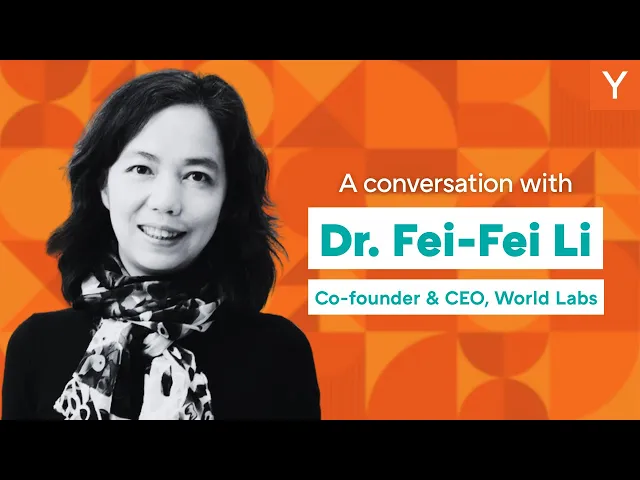
Spatial intelligence: AI's next frontier unfolds
In a deeply insightful conversation at Stanford HAI, renowned AI pioneer Fei-Fei Li presents a compelling vision for artificial intelligence's future evolution. As AI systems rapidly advance in language capabilities, Li argues that the next essential frontier lies in spatial intelligence – the ability for machines to understand, navigate, and interact with the physical world in ways that mirror human perception. This fundamental capability could unlock unprecedented applications across healthcare, education, and our daily environments.
Key points from Fei-Fei Li's presentation:
-
Spatial intelligence represents a fundamental cognitive capability that enables humans to perceive, understand and interact with our three-dimensional world – a capability current AI systems largely lack despite advances in language processing.
-
The integration of spatial intelligence with language models could create AI systems capable of understanding both physical spaces and semantic meaning, potentially revolutionizing human-AI collaboration.
-
Three-dimensional understanding will be crucial for AI applications in healthcare, autonomous systems, and creating more intuitive human-machine interfaces that can "see" and interpret the world as we do.
-
Bridging human and machine intelligence requires deep interdisciplinary research spanning neuroscience, computer science, and cognitive psychology to create systems that complement human capabilities rather than merely replace them.
The transformative potential of spatially-aware AI
What makes Li's vision particularly compelling is her emphasis on complementary intelligence – AI systems designed not to replace humans but to enhance our capabilities through their understanding of both language and physical space. This marks a significant shift from current AI paradigms focused predominantly on language processing and pattern recognition within limited domains.
The implications extend far beyond technical achievements. Spatially intelligent AI could transform eldercare by creating systems that understand physical needs and limitations of aging populations. In healthcare, it could enable more precise surgical assistance and rehabilitation technologies. For accessibility, it could develop tools that navigate and interpret physical environments for those with visual or mobility impairments.
Beyond the lab: Real-world applications emerging today
While Li presents spatial intelligence as an emerging frontier, practical applications are already taking shape. Consider Waymo's autonomous vehicles, which must constantly interpret complex three-dimensional environments to navigate safely. Their systems combine computer vision, sensor fusion, and predictive modeling to create a spatial understanding that enables navigation decisions.
Another compelling example
Recent Videos
Hermes Agent Master Class
https://www.youtube.com/watch?v=R3YOGfTBcQg Welcome to the Hermes Agent Master Class — an 11-episode series taking you from zero to fully leveraging every feature of Nous Research's open-source agent. In this first episode, we install Hermes from scratch on a brand new machine with no prior skills or memory, walk through full configuration with OpenRouter, tour the most important CLI and slash commands, and run our first real task: a competitor research report on a custom children's book AI business idea. Every future episode will build on this fresh install so you can see the compounding value of the agent in real time....
Apr 29, 2026Andrej Karpathy – Outsource your thinking, but you can’t outsource your understanding
https://www.youtube.com/watch?v=96jN2OCOfLs Here's what Andrej Karpathy just figured out that everyone else is still dancing around: we're not in an era of "better models." We're in a different era of computing altogether. And the difference between understanding that and not understanding it is the difference between being a vibe coder and being an agentic engineer. Last October, Karpathy had a realization. AI didn't stop being ChatGPT-adjacent. It fundamentally shifted. Agentic coherent workflows started to actually work. And he's spent the last three months living in side projects, VB coding, exploring what's actually possible. What he found is a framework that explains...
Mar 30, 2026Andrej Karpathy on the Decade of Agents, the Limits of RL, and Why Education Is His Next Mission
A summary of key takeaways from Andrej Karpathy's conversation with Dwarkesh Patel In a wide-ranging conversation with Dwarkesh Patel, Andrej Karpathy — former head of AI at Tesla, founding member of OpenAI, and creator of some of the most popular AI educational content on the internet — shared his views on where AI is headed, what's still broken, and why he's now pouring his energy into education. Here are the key takeaways. "It's the Decade of Agents, Not the Year of Agents" Karpathy's now-famous quote is a direct pushback on industry hype. Early agents like Claude Code and Codex are...