
Self Prompting AI Agent About to Break the Internet: Fully Autonomous AI Workflow
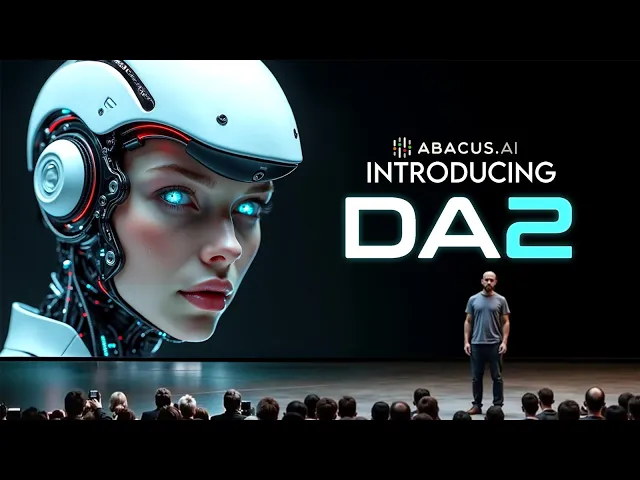
Self-prompting AI agents change the workplace game
In an era where artificial intelligence continues to reshape our digital landscape, a groundbreaking advancement stands poised to fundamentally alter how we work with AI systems. The concept of self-prompting AI agents—systems that can independently generate their own instructions and carry out complex workflows without constant human guidance—represents one of the most significant leaps forward in making AI truly autonomous and remarkably more powerful than the tools most businesses currently employ.
The technology community has been buzzing about this development, which effectively turns AI from a reactive tool waiting for human commands into a proactive agent capable of identifying problems, formulating plans, and executing solutions with minimal human involvement. This shift from prompt-dependent systems to self-directing agents promises to dramatically expand AI's utility across virtually every business function.
Key developments in self-prompting AI
-
From reactive to proactive: Traditional AI systems function reactively, responding only when given specific prompts by human users. Self-prompting agents break this limitation by internally generating the next logical steps in a workflow, allowing them to tackle complex, multi-stage tasks without continuous human direction.
-
Autonomous problem-solving: These systems can identify when they need additional information, determine how to acquire it, and incorporate new data into their reasoning—essentially debugging their own knowledge gaps in ways that mimic human metacognition.
-
Persistent memory and learning: Unlike conventional chatbots that start fresh with each interaction, self-prompting agents maintain context across sessions, building upon previous work and adapting their approaches based on accumulated experience.
Why this matters more than you think
The most profound implication of self-prompting agents is how they transform the human-AI relationship. Rather than functioning as mere tools that require precise instructions, these systems become collaborators capable of independent thought and action. This represents a fundamental shift in how businesses will integrate AI into their workflows.
Consider the current limitations of AI in business settings: employees must learn to craft perfect prompts, break complex tasks into discrete steps, and constantly monitor and correct AI outputs. This creates significant friction that prevents many organizations from realizing AI's full potential. Self-prompting agents eliminate these barriers by handling the prompt engineering internally, effectively democratizing access to AI's capabilities across an organization regardless of an employee's technical expertise.
The business implications extend far beyond simple efficiency gains.
Recent Videos
Hermes Agent Master Class
https://www.youtube.com/watch?v=R3YOGfTBcQg Welcome to the Hermes Agent Master Class — an 11-episode series taking you from zero to fully leveraging every feature of Nous Research's open-source agent. In this first episode, we install Hermes from scratch on a brand new machine with no prior skills or memory, walk through full configuration with OpenRouter, tour the most important CLI and slash commands, and run our first real task: a competitor research report on a custom children's book AI business idea. Every future episode will build on this fresh install so you can see the compounding value of the agent in real time....
Apr 29, 2026Andrej Karpathy – Outsource your thinking, but you can’t outsource your understanding
https://www.youtube.com/watch?v=96jN2OCOfLs Here's what Andrej Karpathy just figured out that everyone else is still dancing around: we're not in an era of "better models." We're in a different era of computing altogether. And the difference between understanding that and not understanding it is the difference between being a vibe coder and being an agentic engineer. Last October, Karpathy had a realization. AI didn't stop being ChatGPT-adjacent. It fundamentally shifted. Agentic coherent workflows started to actually work. And he's spent the last three months living in side projects, VB coding, exploring what's actually possible. What he found is a framework that explains...
Mar 30, 2026Andrej Karpathy on the Decade of Agents, the Limits of RL, and Why Education Is His Next Mission
A summary of key takeaways from Andrej Karpathy's conversation with Dwarkesh Patel In a wide-ranging conversation with Dwarkesh Patel, Andrej Karpathy — former head of AI at Tesla, founding member of OpenAI, and creator of some of the most popular AI educational content on the internet — shared his views on where AI is headed, what's still broken, and why he's now pouring his energy into education. Here are the key takeaways. "It's the Decade of Agents, Not the Year of Agents" Karpathy's now-famous quote is a direct pushback on industry hype. Early agents like Claude Code and Codex are...