
Why Voice Will Be the Fundamental Interface for Tech ft ElevenLabs’ Mati Staniszewski
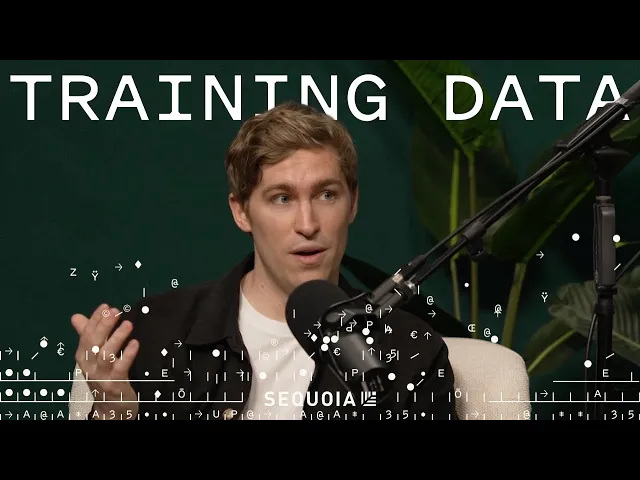
Voice is winning the interface race
In a world where our digital interactions are increasingly seamless, voice technology is emerging as the ultimate frontier in human-computer interaction. As I listened to ElevenLabs' co-founder Mati Staniszewski discuss the future of voice interfaces with Harry Stebbings on the "20VC" podcast, it became clear that we're witnessing a fundamental shift in how we'll interact with technology. The conversation reveals why voice technology isn't just another interface option—it's potentially the most natural and efficient way humans will communicate with machines in the near future.
Key Points
-
Voice as the ultimate interface: Voice represents the most natural form of human communication, requiring less cognitive load than typing or navigating visual interfaces. This inherent efficiency makes it poised to become the dominant interface as the technology matures.
-
AI-powered voice technology: The combination of large language models with advanced voice synthesis creates a powerful new paradigm. These technologies working in tandem allow for more natural, contextually aware voice interactions that truly understand user intent.
-
Democratization of content creation: Voice AI is enabling new forms of content creation and consumption that weren't previously possible, allowing anyone to create professional-sounding audio content in multiple languages without specialized equipment or training.
-
Natural vs. synthetic voices: The industry is moving toward voice technology that can capture human emotion and nuance while maintaining authenticity, creating experiences that connect with users on a deeper level.
Why This Matters
The most compelling insight from the discussion is that voice technology represents a return to our most fundamental form of communication. Throughout human history, we've primarily communicated through speech—it's hardwired into our biology. Other interfaces like keyboards, mice, and touchscreens are relatively recent inventions that require learned behaviors. Voice interfaces remove these artificial barriers, potentially making technology more accessible to everyone regardless of technical literacy, physical ability, or educational background.
This shift has profound implications for the technology industry. For decades, companies have competed to create more intuitive visual interfaces, from command lines to GUIs to touchscreens. Voice technology represents a leapfrog moment that circumvents many of the limitations of visual interfaces. Companies that master this transition will likely capture significant market share as users gravitate toward more natural interaction methods.
Beyond the Podcast
**
Recent Videos
Hermes Agent Master Class
https://www.youtube.com/watch?v=R3YOGfTBcQg Welcome to the Hermes Agent Master Class — an 11-episode series taking you from zero to fully leveraging every feature of Nous Research's open-source agent. In this first episode, we install Hermes from scratch on a brand new machine with no prior skills or memory, walk through full configuration with OpenRouter, tour the most important CLI and slash commands, and run our first real task: a competitor research report on a custom children's book AI business idea. Every future episode will build on this fresh install so you can see the compounding value of the agent in real time....
Apr 29, 2026Andrej Karpathy – Outsource your thinking, but you can’t outsource your understanding
https://www.youtube.com/watch?v=96jN2OCOfLs Here's what Andrej Karpathy just figured out that everyone else is still dancing around: we're not in an era of "better models." We're in a different era of computing altogether. And the difference between understanding that and not understanding it is the difference between being a vibe coder and being an agentic engineer. Last October, Karpathy had a realization. AI didn't stop being ChatGPT-adjacent. It fundamentally shifted. Agentic coherent workflows started to actually work. And he's spent the last three months living in side projects, VB coding, exploring what's actually possible. What he found is a framework that explains...
Mar 30, 2026Andrej Karpathy on the Decade of Agents, the Limits of RL, and Why Education Is His Next Mission
A summary of key takeaways from Andrej Karpathy's conversation with Dwarkesh Patel In a wide-ranging conversation with Dwarkesh Patel, Andrej Karpathy — former head of AI at Tesla, founding member of OpenAI, and creator of some of the most popular AI educational content on the internet — shared his views on where AI is headed, what's still broken, and why he's now pouring his energy into education. Here are the key takeaways. "It's the Decade of Agents, Not the Year of Agents" Karpathy's now-famous quote is a direct pushback on industry hype. Early agents like Claude Code and Codex are...